
Catering to the Connected Athlete

Every other week I write an email discussing what I learn launching and growing Reboot Motion. If you would like to receive it directly in your inbox, subscribe below.
Data is not king. Data analysis is.
That is the tagline I kept coming back to when reading “The Connected Athlete” report recently released by SportTechie and Verizon.
The Connected Athlete was yet another signal the sports world is moving beyond the Moneyball era, beyond just analyzing outcomes, and beyond “Why data”.
Rather, the best organizations understand analysis starts at the very beginning.
They understand the real differentiator is in understanding the athletes themselves to improve outcomes, not just predict them.
They understand How Data.
The Study
Verizon and SportTechie recently surveyed leaders from the top collegiate and professional sports programs to learn how they leverage technology to improve player performance and maximize team success.
They focused on how teams 1) evaluate 2) budget and 3) integrate various technologies, and how this fits in with the rest of the organization.
Their major findings were as follows:
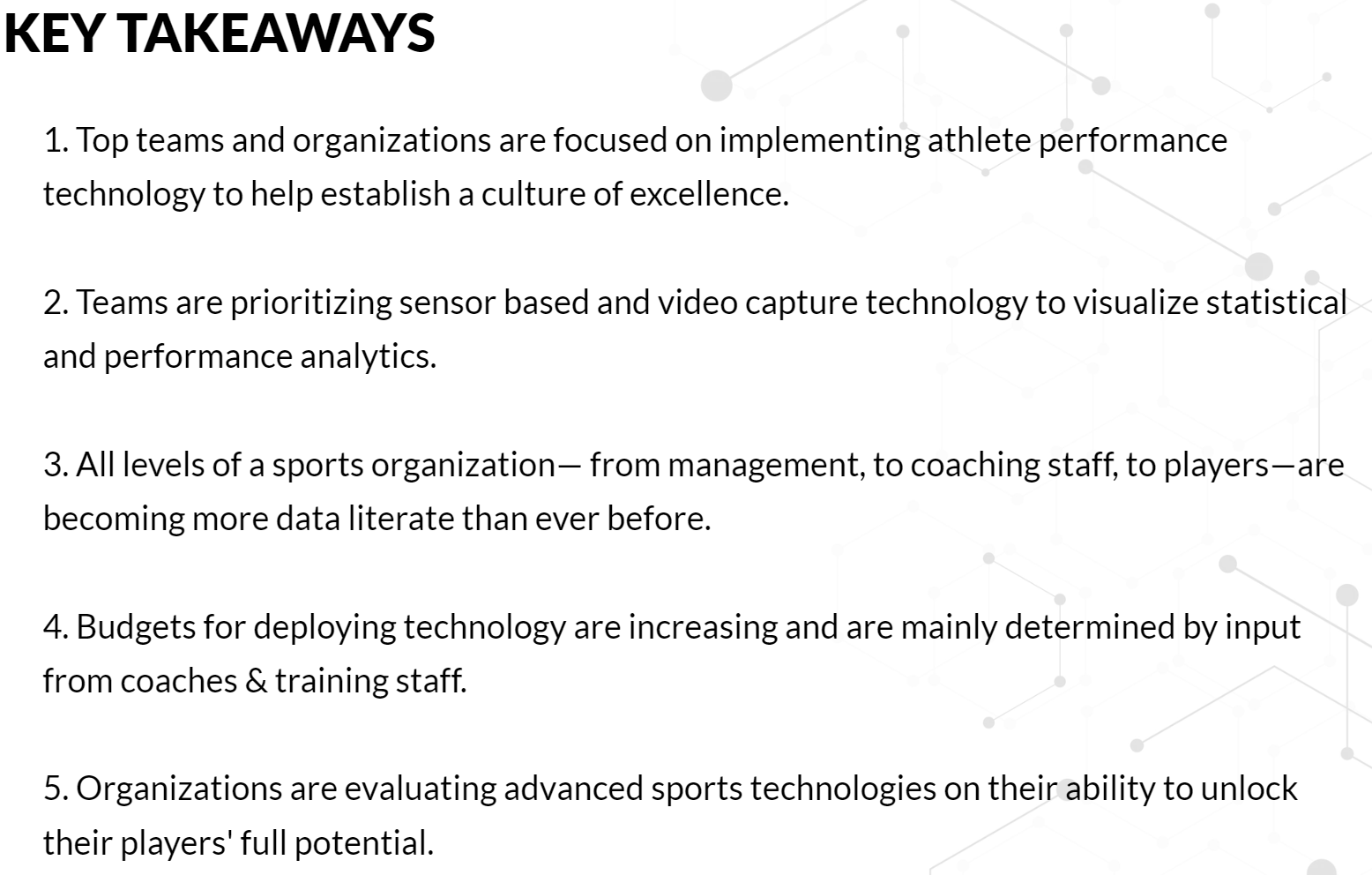
Top teams and organizations are focused on implementing athlete performance technology to help establish a culture of excellence.
Obviously, no one is going to tell you they don’t want to establish a culture of excellence. However, 70% of executives put this as their #1 goal…over other options that included 1) winning championships and 2) bringing revenue.
The #1 advantage to using tech to improve player development will likely always be the insights generated- should a certain player tweak their form, get more rest, spend additional time with the strength and conditioning staff, etc.
However, this response brings up an externality rarely mentioned: improved culture.
Organizations that go the extra mile for their athletes start a cycle. Once direction is set at the top, R&D staff and coaches will put in extra effort to develop talent, and the athlete’s themselves will want to reward the organization for their investment.
While I don’t believe many executives would actually pick culture over championships, they clearly understand the key drivers for both on-field and business success.
Teams are prioritizing sensor based and video capture technology to visualize statistical and performance analytics.
More and more, tech has to live in the background.
Teams want to analyze game data- or at least mirror the environment as much as possible. Similarly, athletes do not want to waste time putting anything on their body that makes them less comfortable while trying to perform at a world class level.
The best sports tech will adapt to athlete and organization demands.
All levels of a sports organization- from management, to coaching staff, to players- are becoming more data literate than ever before.
We are entering a new era. This is the first time front offices and coaches remember data as part of their playing journey. And, it is the first time players grew up with tablets that answered any question they had with the swipe of a finger.
As a result, data literacy is table stakes for coaches and managers…and just being literate may not be enough. Athletes want to understand what is going on, why the plan is what it is, and how everyone is aligned to achieve better outcomes.
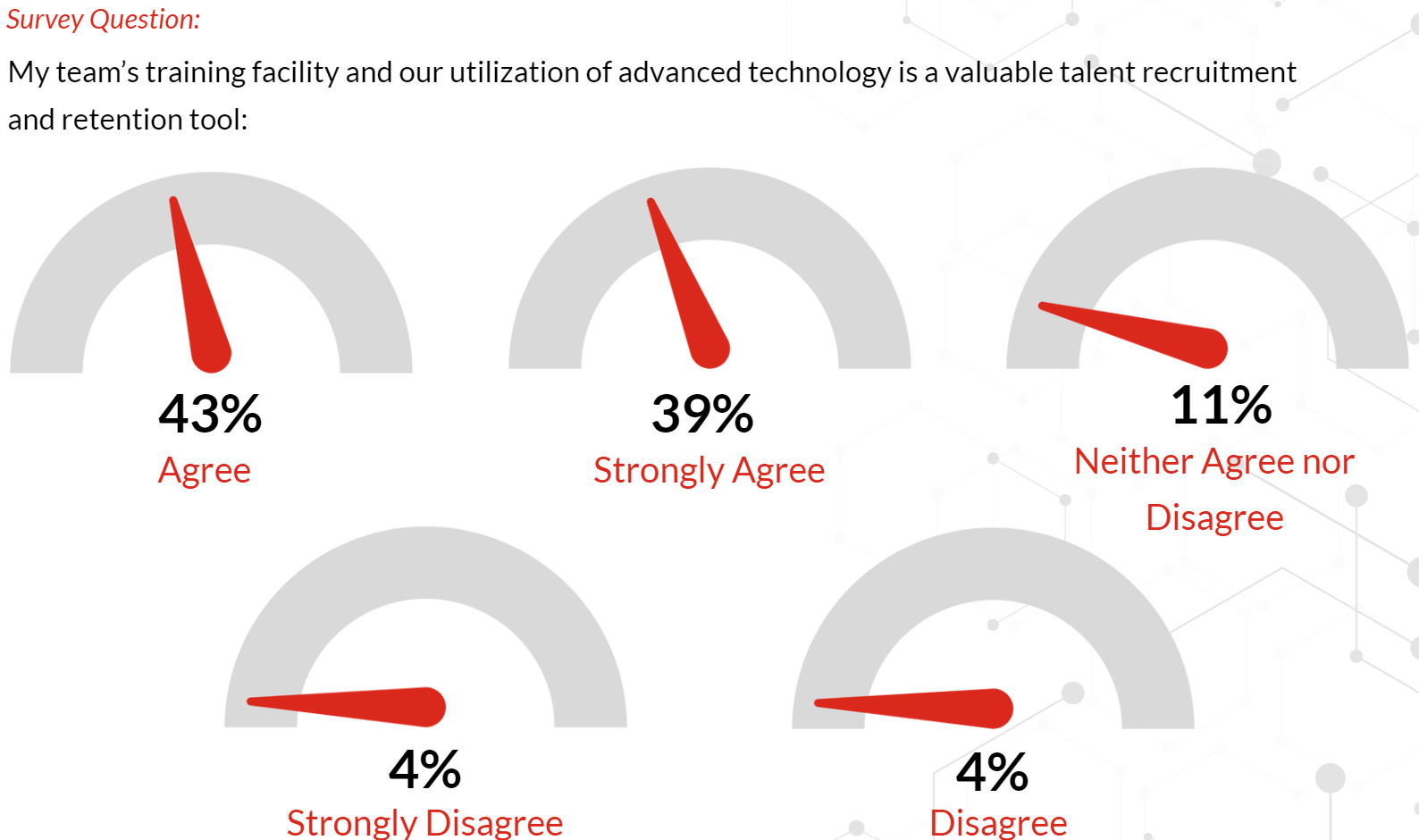
Teams know this- which is why 82% of respondents consider their data strategy a valuable tool for recruiting and retaining talent.
Budgets for deploying technology are increasing and are mainly determined by input from coaches & training staff.
I suspect executives are telling you what they think is true, although I am not sure it is.
Throughout professional and college sports, it is no surprise coaches and strength & conditioning staffs hold a lot of power in determining what tech is purchased and how it is integrated into a team’s player development plans.
At the same time, these are businesses. The investment has to be a good one.
For example, here is Dan Costello, Chief Revenue Officer of the Phoenix Suns, talking about the development of their Verizon 5G Performance Center:
“It’s always Nirvana when the business side and the basketball side can partner together…and authentically showcase a differentiator to help us win basketball games, scout players more effectively, keep players healthy.”
While it is great that GM James Jones- and likely the entire coaching staff- views the Performance Center as critical, it has to make business sense.
This is why teams should think of themselves as investors and their athletes as entrepreneurs. In a world with 9 figure payrolls, extra investment in developing talent is more than worth it.
Organizations are evaluating advanced sports technologies on their ability to unlock their players’ potential
For aspiring sports tech companies, this is what matters.
Pro and college teams everywhere are looking for help making their athletes better.
And the best way companies can help is aiding organizations in today’s arm race: innovation.
No single edge persists for very long- so the best organizations excel at finding the next one…and the one after that…and the one after that.
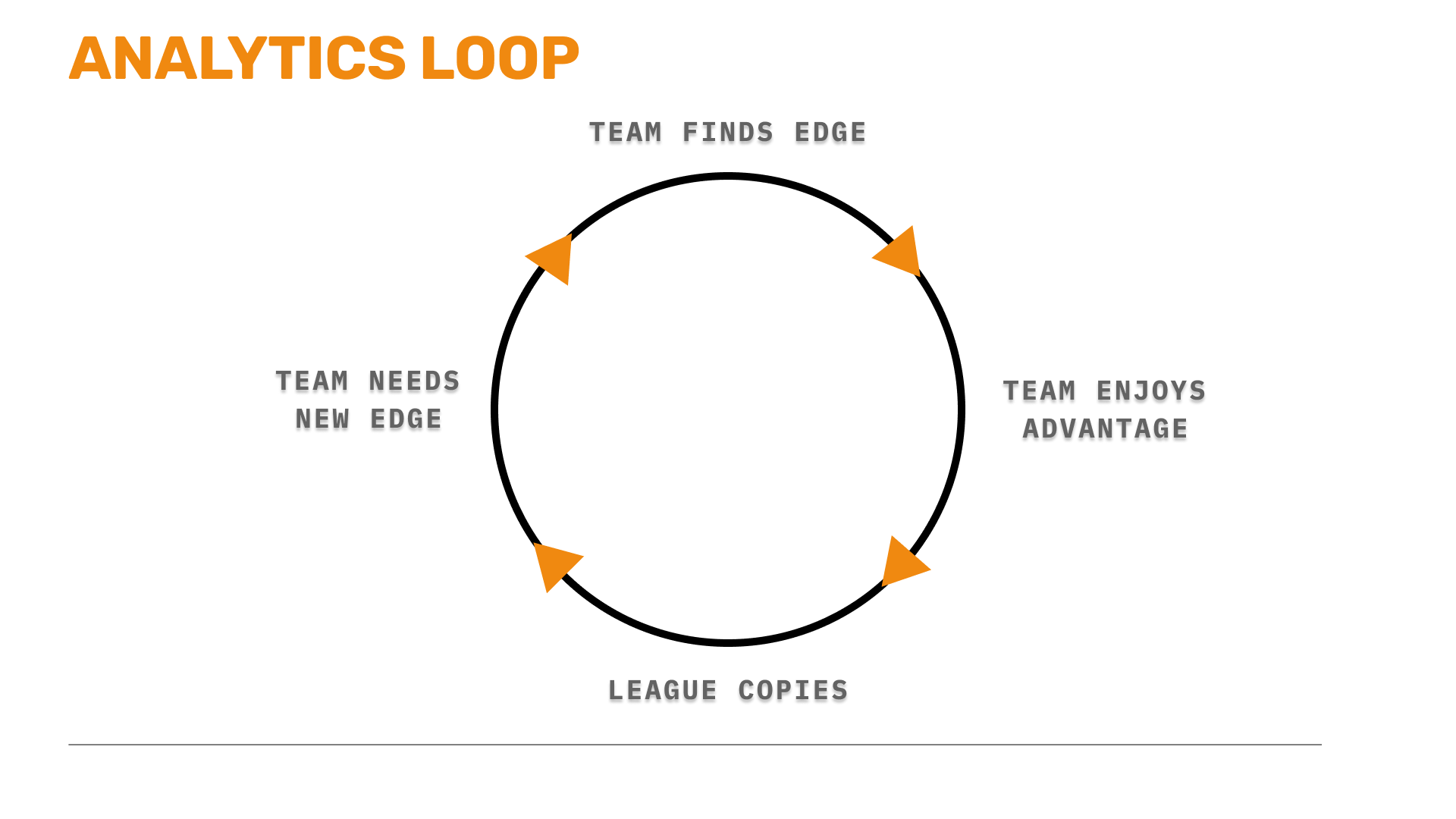
This is why the best technology does not give a single answer, but rather gives organizations the tools necessary to innovate, recruit and retain talent, build a winning culture, and more.